
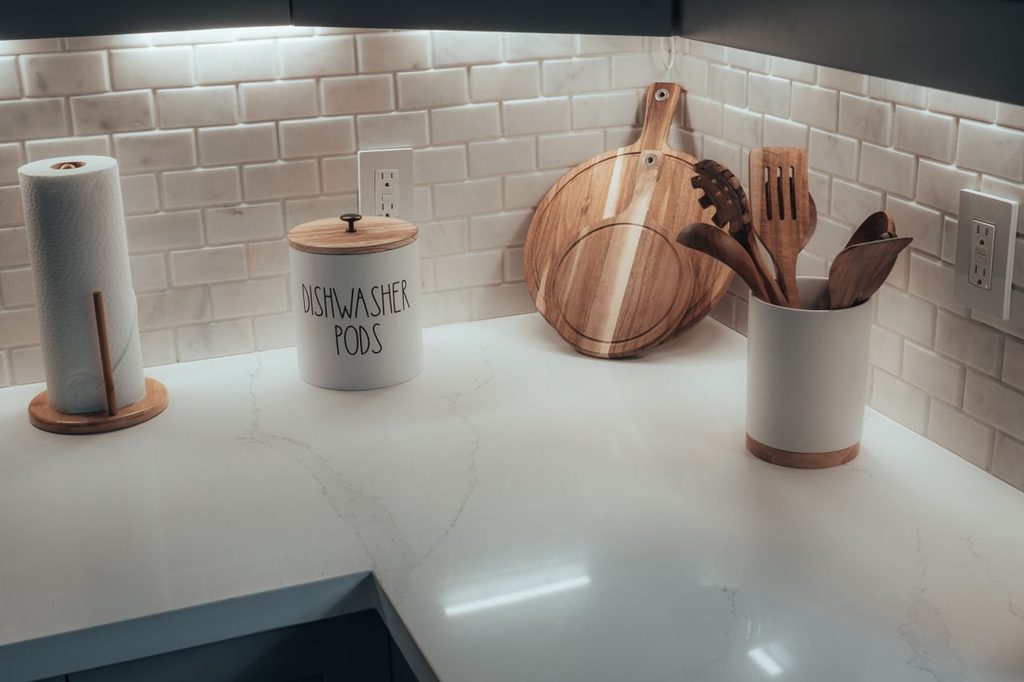
A kitchen countertop does more than provide a place to prepare meals. It is one of the hardest-working surfaces in the home, exposed daily to moisture, food spills, cleaning products, heat, and frequent handling. Choosing the right material can make a meaningful difference in maintaining a cleaner, healthier kitchen.
When comparing countertop options, consider more than color, style, and price. Durability, moisture resistance, maintenance requirements, and indoor air quality deserve just as much attention.
1. Choose Materials That Resist Moisture
Moisture management is essential in any healthy kitchen. Water that seeps into cracks, seams, or damaged surfaces can contribute to deterioration and create conditions favorable to mold growth when moisture remains present.
Nonporous materials such as quartz and properly sealed granite are practical choices. They are less likely to absorb spills than porous, unsealed surfaces.
However, no countertop is completely maintenance-free. Promptly wipe up standing water, especially around sinks, faucets, and backsplash joints.
2. Consider How Easily the Surface Can Be Cleaned
A healthy food preparation area should be easy to clean without requiring harsh chemicals or excessive effort.
Quartz offers a smooth, nonporous surface that generally requires mild soap and water for routine cleaning. Granite can also be a good option, although it may require periodic sealing depending on the stone and manufacturer’s recommendations.
Avoid overlooking seams, edges, and areas where the countertop meets the sink. These locations can collect moisture, food debris, and residue if poorly maintained.
3. Pay Attention to Indoor Air Quality
Countertop materials and their installation products can affect indoor air quality. Some manufactured surfaces, adhesives, and sealants may release volatile organic compounds (VOCs).
Ask manufacturers about product emissions, available low-VOC adhesives, and relevant indoor air quality certifications. Proper ventilation during installation is also important.
For households concerned about indoor air quality, choosing products with transparent emissions information is a sensible precaution.
4. Compare Popular Countertop Materials
Here are several common options to consider:
- Quartz: Nonporous, durable, and relatively low maintenance. Avoid excessive heat.
- Granite: Natural stone with excellent durability, but some varieties require periodic sealing.
- Solid Surface: Seamless-looking options with easy maintenance and repairable minor scratches.
- Laminate: Affordable and easy to clean, but damaged seams or edges can allow moisture intrusion.
- Butcher Block: Attractive and functional, but requires regular maintenance and careful moisture control.
5. Inspect the Details Before Making a Decision
Even an excellent countertop material can become a problem if improperly installed or neglected. Check that sink connections are sealed, seams are tight, and plumbing fixtures do not leak.
Pay particular attention to cabinets beneath sinks. A small, unnoticed leak can cause hidden water damage long before visible signs appear.
A Healthier Kitchen Starts With Smart Choices
The best countertop is one that fits your cooking habits, maintenance expectations, and budget while supporting good moisture control and indoor air quality.
Remember, a healthy kitchen is not created by one material alone. Proper installation, routine cleaning, adequate ventilation, and prompt attention to leaks all work together to protect the home and the people living in it.