
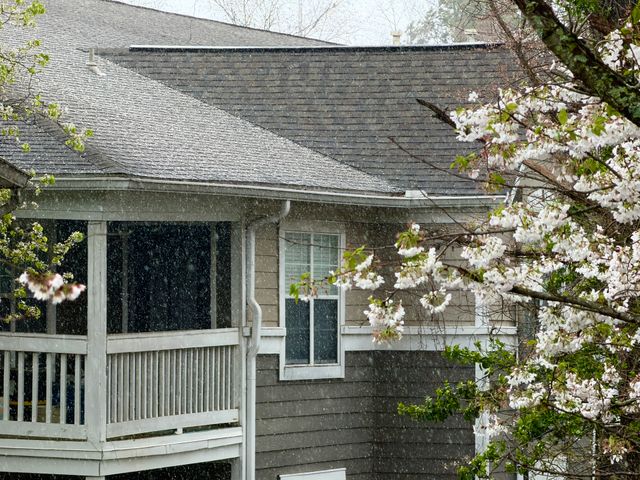
When most homeowners look at their gutters, they are usually thinking about one thing: rain. Are the gutters full of leaves? Is water spilling over the edge? Does the downspout seem to be working?
But gutters can tell a much bigger story.
They are part of your home’s drainage system, and the way they collect and direct water can have a direct impact on the condition of the roof, siding, foundation, crawl space, and even indoor air quality. In Georgia, where heavy rain, humidity, and long periods of moisture are common, that story deserves some attention.
Water Has a Way of Finding Problems
A properly functioning gutter system moves roof runoff away from the house. When gutters are clogged, damaged, sagging, or poorly pitched, water can overflow against exterior walls or collect around the foundation.
That persistent moisture can contribute to wood deterioration, staining, soil erosion, and conditions that encourage mold growth. It may not create an obvious problem overnight, but repeated wetting can gradually turn a minor drainage issue into a costly repair.
Downspouts Matter More Than They Look
A gutter can be perfectly clean and still fail to protect the home if the downspout releases water too close to the foundation.
Ideally, runoff should be directed away from the structure and toward an appropriate drainage area. If you notice damp soil, erosion, or standing water near a downspout after a storm, it is worth investigating rather than simply assuming the ground will dry out.
Gutters Can Offer Clues About Larger Problems
Gutters are also useful because they can reveal clues about the home itself.
For example, overflowing gutters may point to inadequate maintenance, but they can also indicate a drainage design problem. Sagging sections could mean the system is overloaded, improperly installed, or deteriorating. Rust, separation at joints, and recurring leaks suggest that the system may no longer be performing as intended.
Look beyond the gutters, too. Water stains beneath roof edges, peeling exterior paint, damaged trim, moss or algae growth, and unusually damp areas around the foundation can all warrant a closer look.
A Simple Inspection Can Prevent Bigger Headaches
Keeping gutters clear is one of the simplest ways to help protect a home from moisture-related damage. Check them regularly, especially after storms and during seasons when leaves and debris accumulate. Make sure downspouts are securely connected and directing water away from the structure.
Most importantly, do not treat gutters as an isolated maintenance item. They are part of the home’s overall moisture-management system.
A gutter may seem like a small component attached to the roofline, but its performance can provide valuable clues about how well a home is managing water. And when it comes to moisture, spotting the clues early is often far easier—and less expensive—than dealing with the consequences later.