
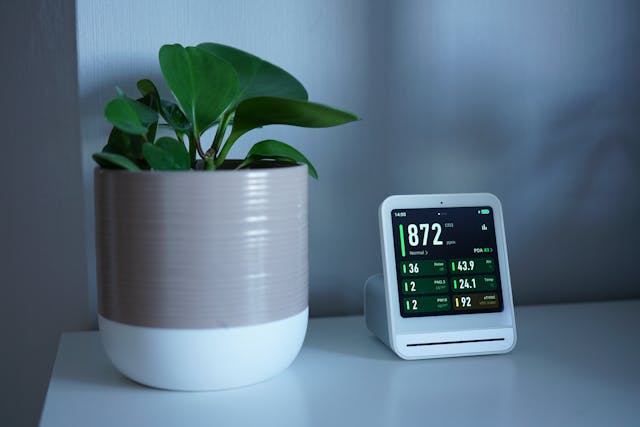
The Short Answer: Increasingly, Yes—But with Context
Indoor air quality has become a major focus in modern homes, and for good reason. Many of the most common comfort complaints—headaches, lingering odors, humidity issues, and unexplained allergies—are tied to what’s floating around in the air rather than what’s visibly wrong in a space. Air quality sensors can offer useful insight, but their value depends on how and why they’re used.
What These Devices Actually Measure
Most home air quality sensors track a combination of particulate matter (PM2.5 and PM10), volatile organic compounds (VOCs), carbon dioxide (CO₂), humidity, and sometimes temperature. Each of these metrics tells a different story.
Particulate matter often reflects dust, smoke, or combustion byproducts. VOCs can come from cleaning products, paint, new furniture, or even stored household items. Elevated CO₂ levels usually point to ventilation issues, especially in tightly sealed modern homes. Humidity readings are particularly important because moisture imbalance can quietly create conditions for mold growth and material deterioration.
Where Air Quality Sensors Shine
These devices are most valuable as early warning systems. Rather than identifying a problem after it becomes visible or noticeable, they can highlight subtle shifts before they escalate. For example, a slow rise in humidity in a basement or bathroom may suggest poor ventilation or hidden moisture intrusion. Similarly, consistent VOC spikes after certain activities can help pinpoint indoor pollution sources that would otherwise go unnoticed.
They are also helpful in confirming improvements. After ventilation upgrades or dehumidifier installation, sensor trends can show whether conditions are stabilizing or still fluctuating.
Limitations Worth Understanding
Despite their usefulness, air quality sensors are not diagnostic tools. A high reading does not explain the source of a problem—it only signals that something deserves attention. False alarms or short-term spikes are also common, especially when cooking, cleaning, or hosting guests.
Additionally, cheaper devices may lack calibration accuracy, leading to misleading data. This can result in unnecessary concern or, conversely, overlooked issues if readings are unreliable.
Are They Worth the Investment?
For most households, the answer is yes—when expectations are realistic. Think of them as environmental monitors rather than problem solvers. They are most effective when paired with proper ventilation practices, routine maintenance, and occasional professional assessment when patterns persist.
Homes with past moisture issues, renovations, or occupants sensitive to allergens tend to benefit the most. Even in well-maintained properties, these sensors provide a clearer picture of daily indoor conditions that are otherwise invisible.
Final Takeaway
Air quality sensors are not essential for every home, but they are increasingly practical tools for understanding indoor environments. When used thoughtfully, they add an extra layer of awareness that helps maintain healthier, more comfortable living spaces without guesswork.